Lost Toronto

A love letter to the city we remember, and the stranger it keeps becoming.
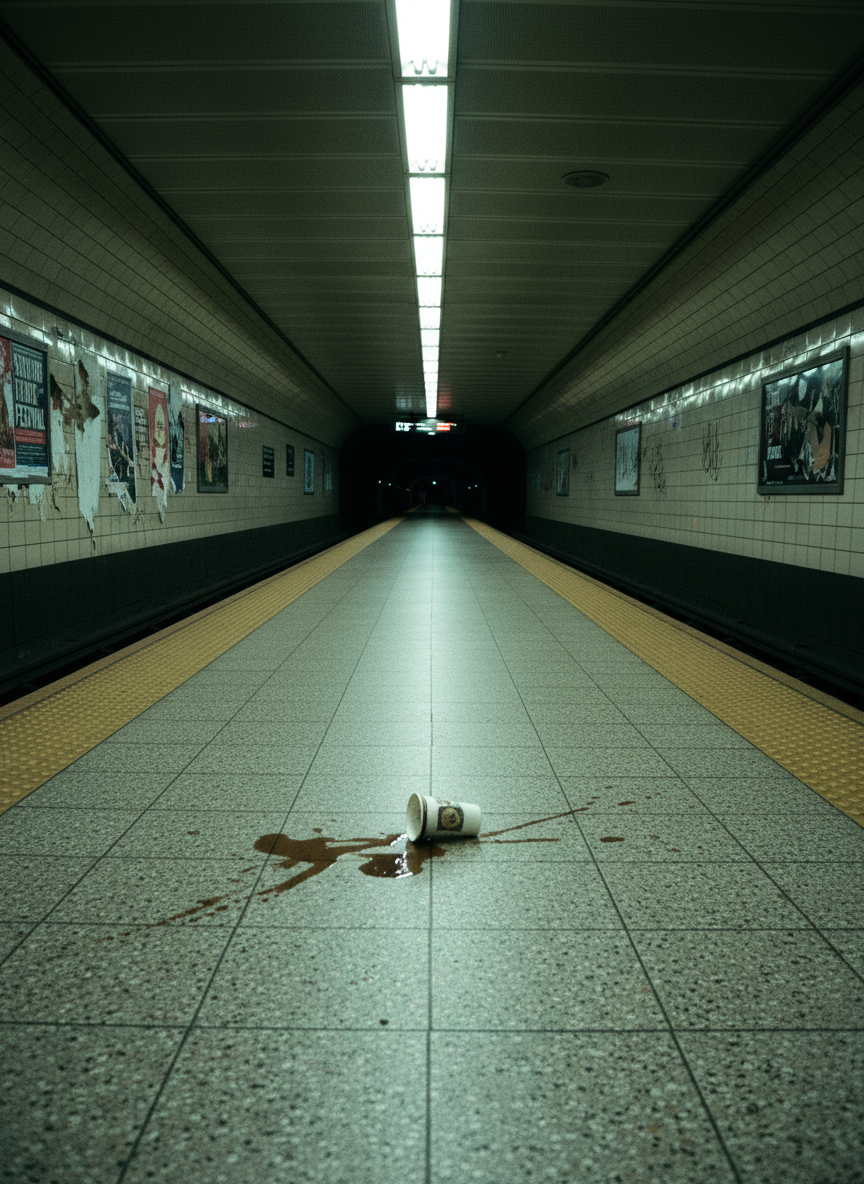
A lonely, fluorescent-lit TTC subway platform at St. Andrew station, photographed late at night, with a single discarded paper coffee cup tipped over near the yellow safety strip, its brown stain seeping into the cold, speckled tiles. The walls are lined with dated beige tiles and scratched advertisement panels featuring torn, curling posters for past festivals. Overhead, harsh fluorescent tubes buzz faintly, casting washed-out, greenish light that exaggerates every crack and stain. Shot on analog film with a wide-angle lens from a low perspective along the platform edge, the rails stretch into a dark tunnel, drawing the eye into uncertainty. The composition is symmetrical yet unsettling, capturing the sterile, liminal loneliness of Toronto’s underbelly, equal parts familiar comfort and quiet despair.
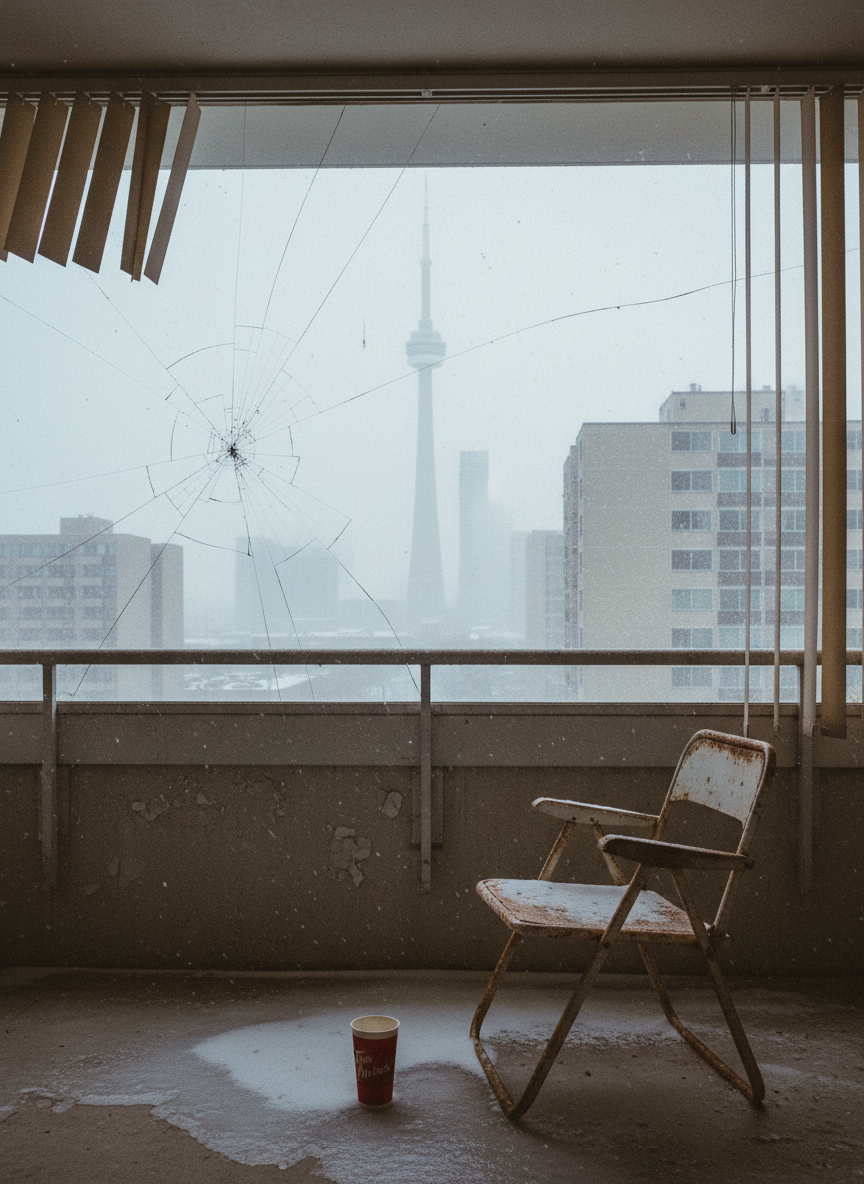
A snow-dusted view of the CN Tower seen through a cracked, grimy high-rise balcony window in a 1970s apartment block, the city’s skyline softened by blowing lake-effect flurries. The interior foreground shows a chipped concrete balcony ledge with a forgotten rusted folding chair and a stained Tim Hortons cup half-frozen into a thin layer of ice. Dirty vertical blinds hang partially open, casting jagged shadows across the window frame. The pale winter daylight is flat and overcast, giving the scene a desaturated, analog-film look with soft edges and pronounced grain. Shot from slightly inside the dim apartment looking out, the composition layers interior decay against iconic city pride, creating a conflicted, moody portrait of Toronto as simultaneously majestic and quietly falling apart.

Flip through yesterday’s Queen West and today’s glass, quiet laneways before they trended, and waterfronts before the condos. Each pairing tugs at that Toronto ache: pride, regret, and the urge to walk it all again.
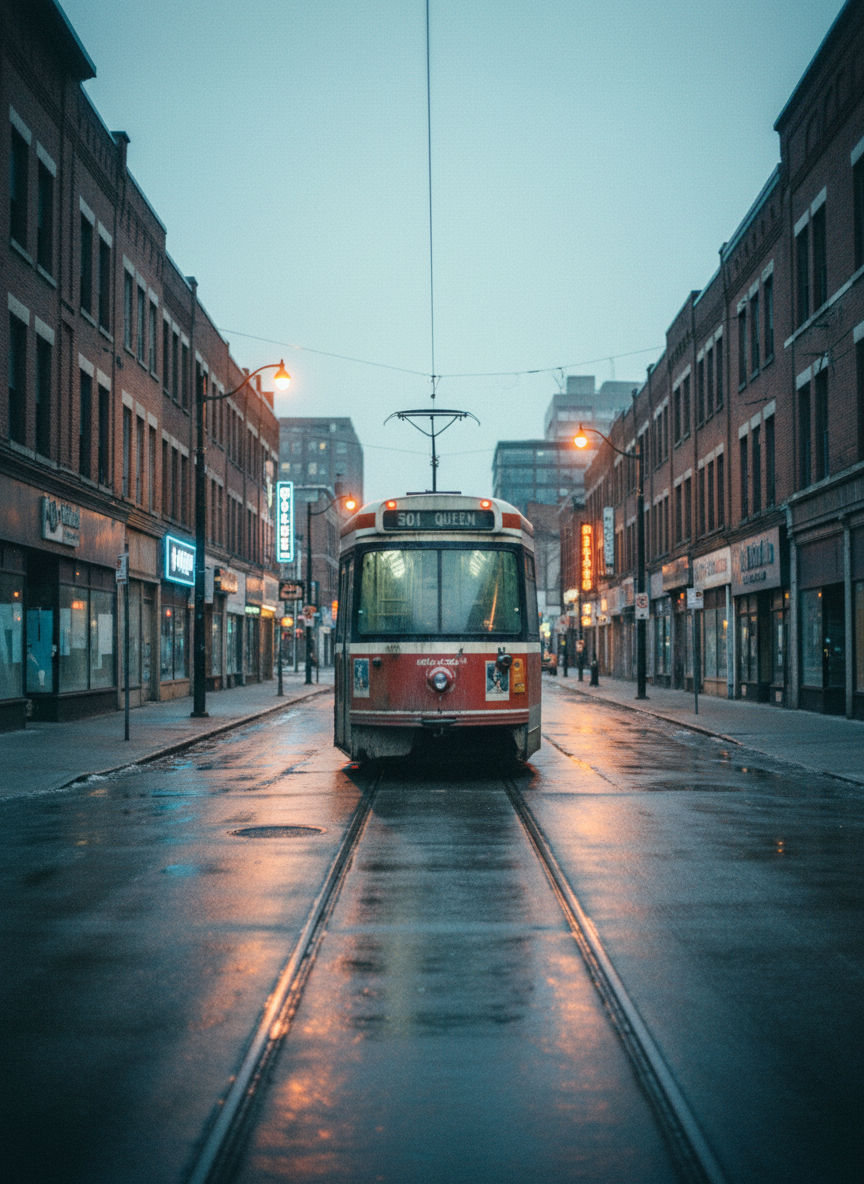
A weathered Toronto streetcar, painted in faded red and white, sits motionless in the middle of an empty Queen Street intersection, its metal sides streaked with winter grime and old advertising ghosts barely visible beneath peeling vinyl. Surrounding it, low-rise brick storefronts with flickering neon signs and papered-over windows stretch into the distance. The scene is captured at blue hour, with sodium-vapor streetlights casting sickly yellow pools on slushy asphalt, reflecting warped streetcar lights. Shot at eye level on grainy analog film, with a slightly soft focus and muted color palette, the composition uses the streetcar centered in the frame while the deserted city recedes into a moody, nostalgic blur, equal parts love letter and eulogy to Toronto’s streets.

Zoom into neon marquees, corner stores, and dance floors now reborn as pharmacies or condos. These then-and-now frames invite you to mourn, laugh, and maybe forgive the city for never staying still.

About

Tiny Stories, Big Toronto

Each corner of Toronto holds a memory: a shuttered club, a vanishing diner, a condo-shadowed parkette. These short musings trace the city’s shifting streets, linking you to deeper dives on beloved haunts, missed connections, and the version of Toronto that almost stayed.